
Last updated November 4, 2026
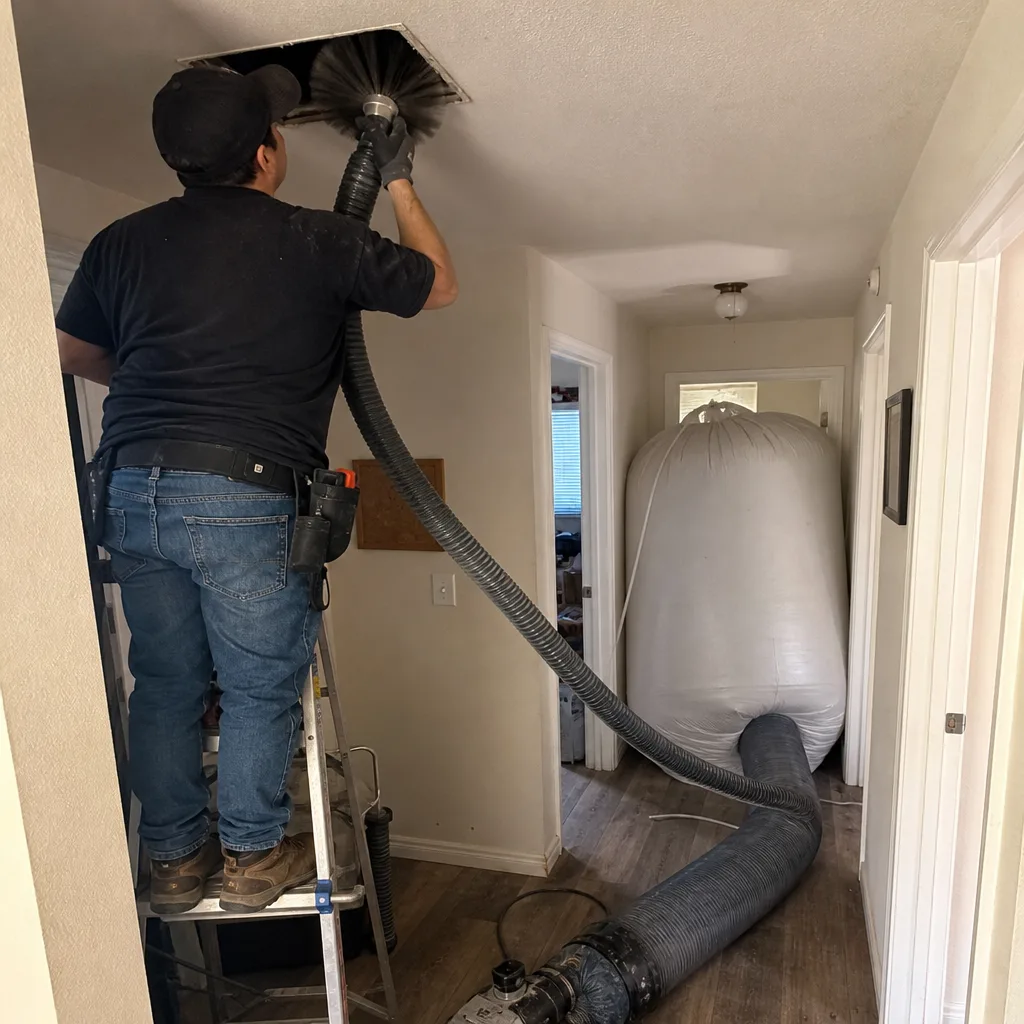
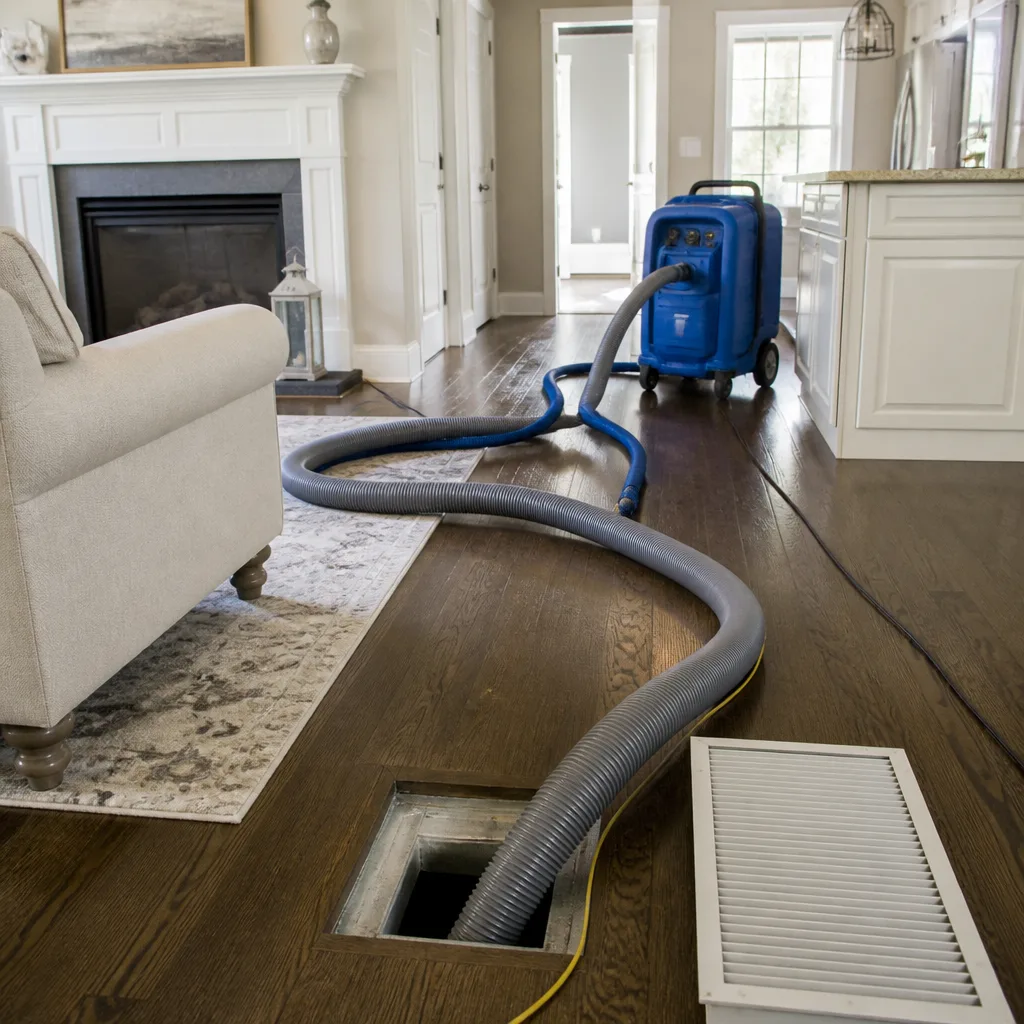 Whole-home duct cleaning
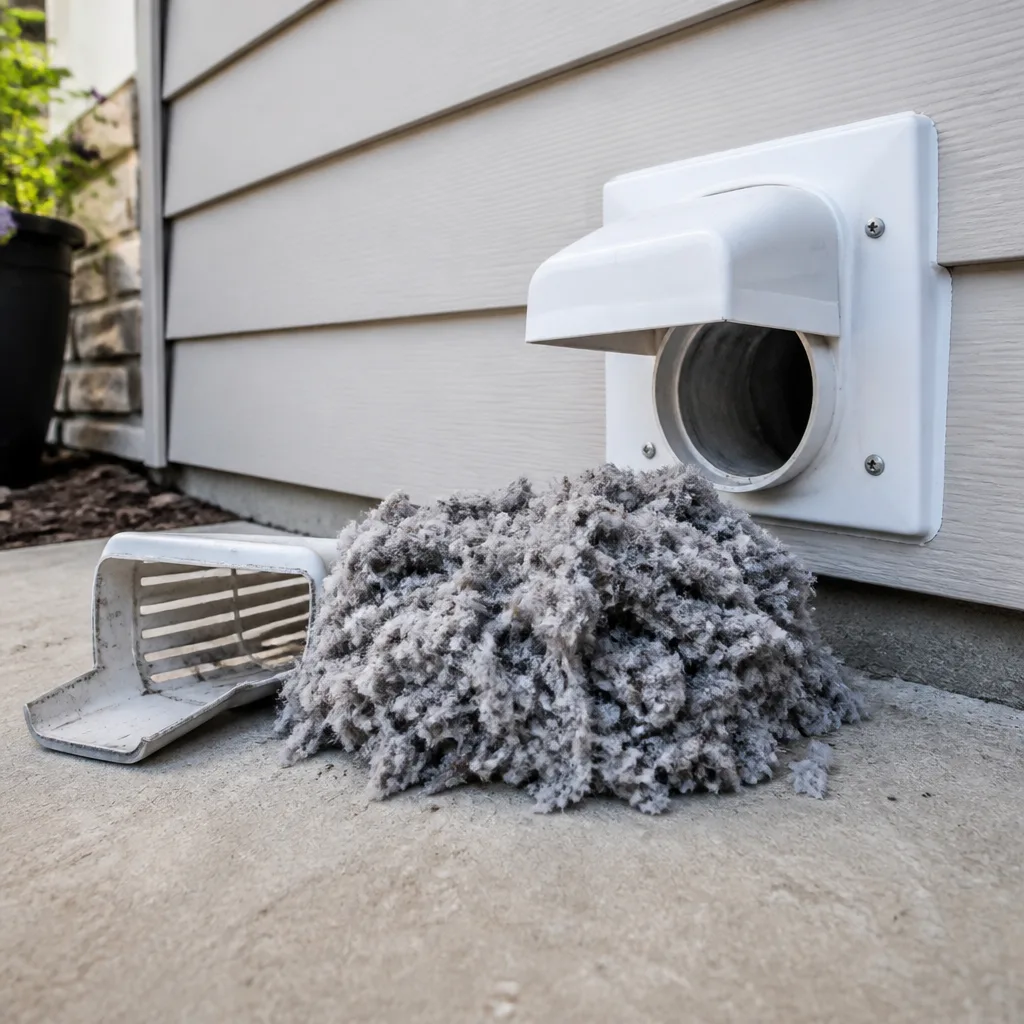 Dryer vent cleaning
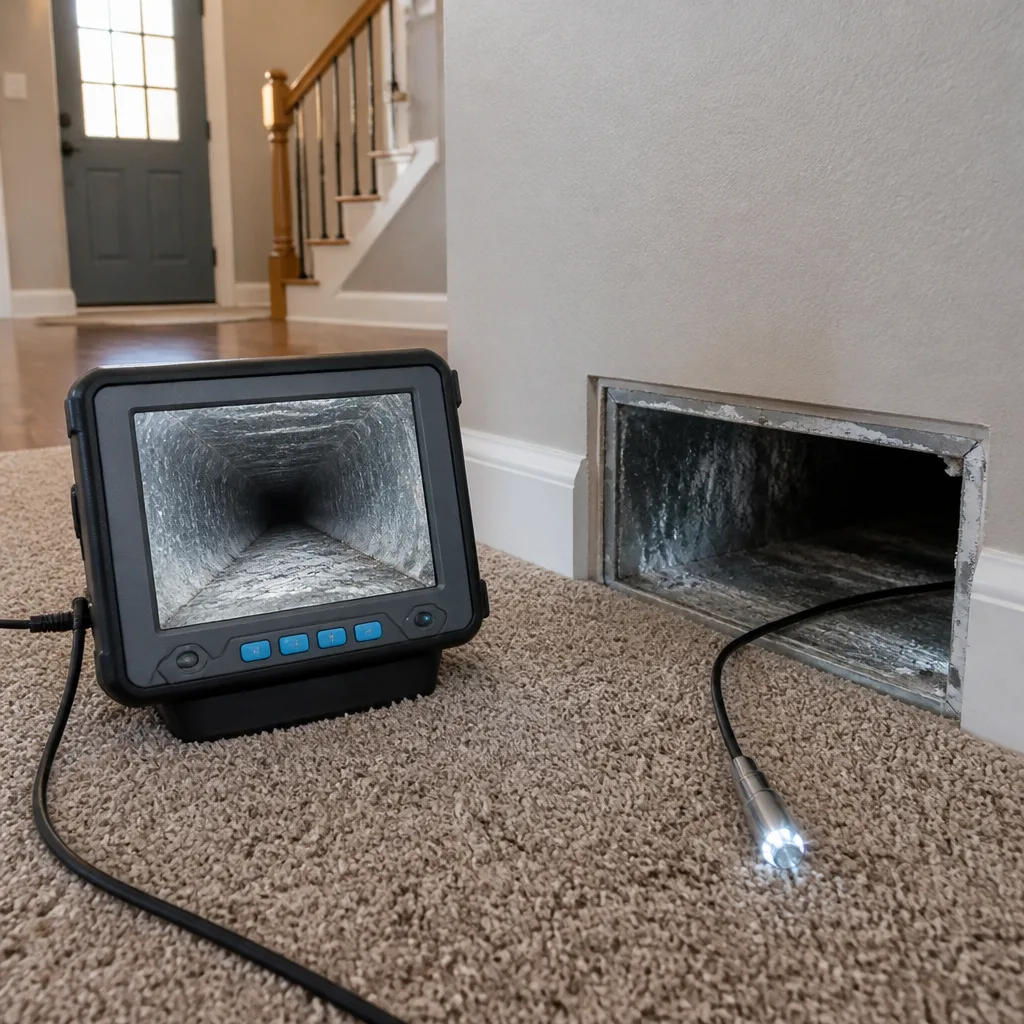 Camera inspection
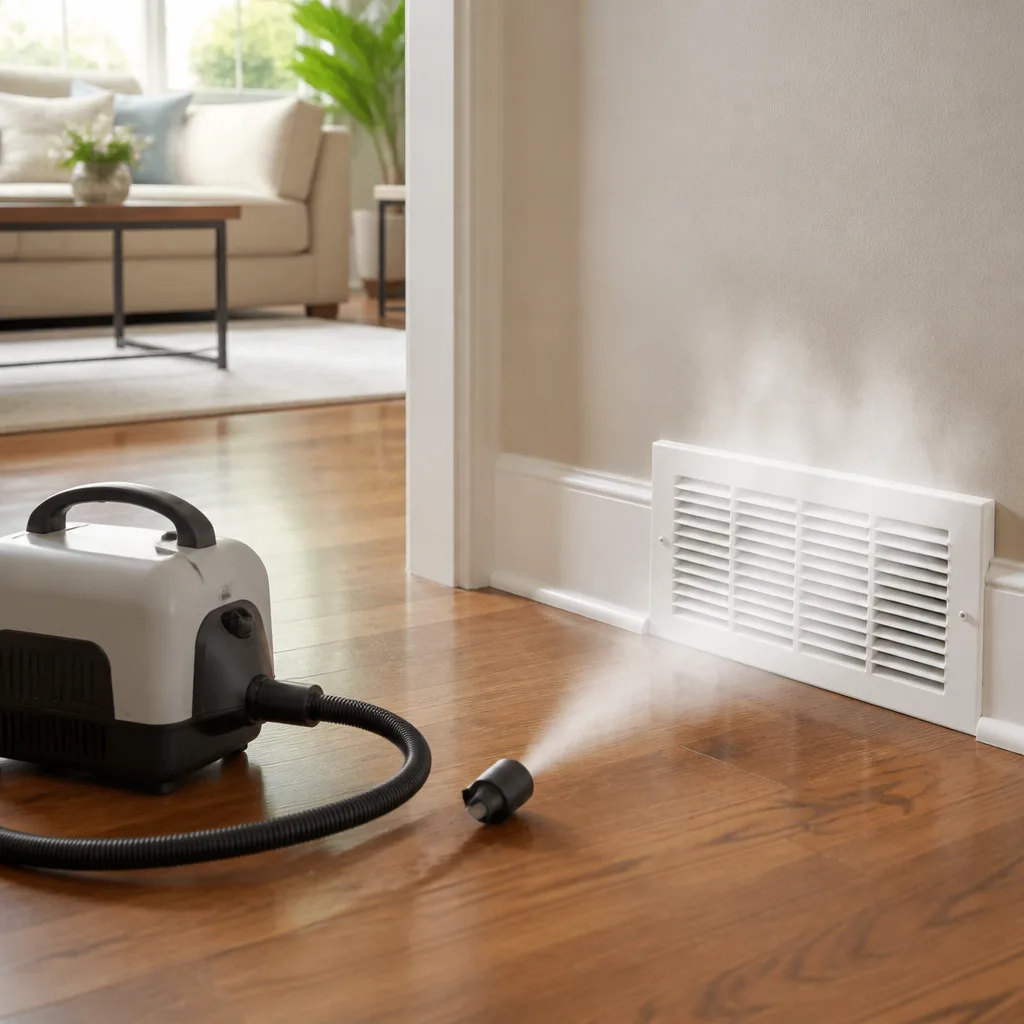 Sanitizing & deodorizing
Whole-system duct and dryer vent check with before-and-after photos - you see exactly what came out of your vents
That "$99 whole-house special" is a bait ad - the real number appears once they are in your hallway, or the "clean" is a shop-vac at the register. We photograph the inside of your ducts before and after instead.
How to Hire an Air Duct Cleaning Contractor in Arden-Arcade: A Step-by-Step Guide
Most people assume the hard part is finding someone to clean the ducts. It’s not. The hard part is figuring out which of the dozens of companies in the Sacramento area actually has anything more than a portable vacuum and a ladder. California does not require a specific duct cleaning license, which means the barrier to entry is a business card and a Google listing. This guide walks Arden-Arcade homeowners through evaluating contractors based on what actually matters: the equipment they bring, the process they follow, and whether they can prove the work happened. By the end, you’ll know exactly which questions eliminate the pretenders before they ever set foot in your house.
Quick Answer
To hire an air duct cleaning contractor in Arden-Arcade, confirm they use truck-mounted or industrial portable negative-air equipment with a CFM rating of at least 2,000, verify NADCA membership through the association’s public directory, request a whole-system flat quote rather than per-vent pricing, and insist on before-and-after photo documentation of every supply and return. Companies that pass all four checks – including those with Copper Air Duct Cleaning‘s equipment profile of Rotobrush agitation tools, Nikro vacuum systems, and Abatement Technologies containment gear – are operating at a fundamentally different level than the low-bid competition.
Styles & brands we work with
- Whole-home duct cleaning
- Dryer vent cleaning
- Camera inspection
- Sanitizing & deodorizing
Table of Contents
- Why Hiring Is the Real Filter in California
- The Three Equipment Questions That Eliminate Most Contractors
- What NADCA Membership Actually Tells You (and How to Verify It)
- Red Flags Specific to Sacramento Duct Cleaning Scams
- How to Read a Duct Cleaning Quote Line by Line
- What a Legitimate Pre-Job Walkthrough Looks Like
- The Step-by-Step Hiring Process
- Common Mistakes to Avoid
- When to Call a Professional
- Frequently Asked Questions
- The Bottom Line
Why Hiring Is the Real Filter in California
Here’s the thing most homeowners in Arden-Arcade don’t realize until after they’ve hired someone: unlike electricians, plumbers, and HVAC contractors, air duct cleaners do not need a state-issued trade license in California. A person can print “Duct Cleaning Experts” on a magnet, stick it on a minivan, and start booking jobs tomorrow. No exam. No apprenticeship. No proof of insurance filed with a state board. That shifts the entire burden of quality control onto the hiring decision itself. The questions you ask before the job are the only regulatory framework you have.
What makes this especially relevant in the greater Sacramento area is the age of the housing stock. Many Arden-Arcade homes were built between the 1950s and 1980s, and plenty still run on the original sheet metal ductwork or early flex duct that has since degraded. Dust coated on a 50-year-old galvanized duct wall is physically different from dust in a 10-year-old system – it’s packed, adhered, sometimes rust-bonded. A contractor using adequate extraction force and mechanical agitation gets that off. A contractor using a low-power portable machine does not, and the difference is invisible from the living room sofa. Which is precisely why the equipment conversation matters before anyone opens a register.
The Three Equipment Questions That Eliminate Most Contractors
In our experience across Arden-Arcade, about 70 percent of duct cleaning companies fall into the “blow and vac” category. They bring a portable vacuum unit, connect a hose to a floor register, and hope friction does the rest. It doesn’t. Here are the three questions to ask on the phone before you book anything.
- “What type of vacuum system do you use, and what’s the CFM rating?” CFM stands for cubic feet per minute, and it measures airflow through the collection system. A legitimate whole-house cleaning setup should move at least 2,000 CFM at the hose connection point. Truck-mounted systems powered by the vehicle’s engine routinely exceed that. Portable equipment from a big-box store typically struggles to reach 500 CFM. The math is simple: you cannot pull debris out of a duct you cannot move air through. If the person on the phone can’t answer this question, that’s the answer.
- “Do you use mechanical agitation brushes, or just vacuum alone?” Here’s the key distinction. Vacuum-only cleaning removes loose debris sitting in the bottom of the duct. A rotating brush system, like the Rotobrush source-removal units used by full-system specialists, physically scrubs the duct wall to dislodge the film that has adhered over years of operation. The method is called source-removal cleaning: remove the source of the contamination, not just the visible dust bunnies. Ask specifically whether they scrub the duct walls or simply vacuum what’s already loose.
- “How do you keep the loosened debris from entering the living space?” When you agitate duct walls with a brush, particles go airborne inside the duct. If the contractor’s system doesn’t maintain negative pressure at the point of agitation, those particles exit through the registers into your home. Professional setups use containment equipment, such as the Abatement Technologies negative-air machines used on higher-end jobs, to keep the work area sealed while the vacuum runs. Listen for words like “containment,” “negative pressure,” and “sealed work area.” If the answer is “we put a tarp over the register,” keep dialing.
These three questions take about ninety seconds to ask. They will eliminate the majority of contractors working the Sacramento market, including some with polished websites and aggressive Facebook ads. The equipment conversation is the fastest path to separating air duct cleaning performed with industrial tools from the consumer-grade jobs that leave half the debris in place.
What NADCA Membership Actually Tells You (and How to Verify It)
NADCA, the National Air Duct Cleaners Association, is the closest thing the industry has to a professional standard. Membership is not a government license, but it is a meaningful signal because it requires adherence to published cleaning specifications and ongoing education. What matters more is how easy it is to verify. Too many contractors claim an affiliation without paying the dues.
Here’s the 30-second verification process. Go to NADCA’s website and use their “Find a Professional” directory. Search for the company by the exact name they use in their marketing. If they appear in the directory, they are current members. If they don’t appear, whatever acronym they put on their website is borrowed credibility. This is not a gray area – the directory is public and updated. There is no legitimate reason a company cannot be found there.
The reason NADCA matters in a practical sense goes back to process. NADCA’s standard, often referred to as ACR (Assessment, Cleaning, and Restoration), requires an inspection before cleaning, mechanical agitation during cleaning, and post-cleaning verification. It lines up closely with the source-removal methodology used by companies running equipment like Nikro industrial-grade vacuums and Rotobrush systems. When a company in Arden-Arcade operates to that standard, you as the homeowner get a documented process. When a company brushes off the NADCA question with “we do the same thing anyway,” you’re dealing with someone who has not demonstrated that claim to anyone.
Red Flags Specific to Sacramento Duct Cleaning Scams
The low-bid duct cleaning scam is so well documented in the Sacramento region that it has a recognizable pattern. A company advertises a whole-house cleaning for $59 or $79, dispatches a technician with a portable vacuum and a camera, and the technician “discovers” mold, pests, or a collapsed duct that requires an additional $800 to $1,500 to address. The original $59 becomes irrelevant the moment the van parks in the driveway. Here are the specific signals, as they appear in this market, that the job is a bait-and-switch.
- A “per vent” rate that doesn’t add up to the advertised price. If the ad says $59 but the fine print says the price covers only ten vents, and your home has fourteen, you are not buying a $59 cleaning. You are buying a structured upsell. Legitimate full-system pricing covers the entire job based on the size and configuration of the home. Ask what the total written price will be before the technician arrives, and hold them to the quote.
- Mold “discovery” with an on-site test. No legitimate mold assessment happens in ten seconds with a flashlight. If a technician claims to see mold immediately and offers a $900 remediation service right then, you are inside a script. Stop the job, request a written report, and get a second opinion from a company whose bid is not tied to what the first technician “found.”
- Pressure to decide before the technician leaves. Any contractor offering a significant discount “today only” is breaking the most basic rule of ethical sales in home services. Duct cleaning quotes should be stable, written, and valid for at least 30 days. A quote that evaporates when the van leaves is a manipulation.
- Refusal to provide a physical address with a local presence. Some operations in the greater Sacramento area are call-center fronts with a rotating cast of subcontractors. When you ask where the company is based and the answer is vague, that’s your sign. A legitimate Arden-Arcade contractor can tell you where they are and who will be doing the work.
How to Read a Duct Cleaning Quote Line by Line
Quotes look different depending on the company’s pricing model. The two most common in this market are per-vent pricing and whole-system pricing. Understanding what each one hides is the difference between a fair job and a slow-motion upsell.
Per-vent pricing quotes a dollar amount for each supply, return, and sometimes each foot of main trunk line. The quote typically looks low because the number next to the dollar sign is small, but the excluded items are where the final invoice grows. Watch for these common exclusions: main trunk lines, return air drops, the air handler cabinet, the blower wheel, and access cuts for the vacuum hose. A $15-per-vent quote with seven exclusions is not a cheap quote. It’s an incomplete one with a surprise waiting at the end.
Whole-system pricing quotes one flat number for the entire home, agreed up front, based on the number of systems, the square footage, and the accessibility of the ductwork. The written estimate should state exactly what’s included: all supply registers, all returns, the main trunk, the plenum, the blower assembly, and the return drop. If a line item is missing, ask for it to be added in writing before work begins. A company running full-system equipment – Nikro vacuums paired with Rotobrush source-removal tools and containment – can price the whole system because their process handles every component. A vacuum-only company prices per vent because that’s all they can reach.
One more thing worth checking: is the quote for cleaning only, or does it include any repair work identified during the walkthrough? Some homes in Arden-Arcade have flex duct that has separated at the collar, or sheet metal joints that have pulled apart over decades of thermal cycling. A company that only vacuums will simply clean around those failures. A full-system company with a repair scope will note the problem on the quote so you know what you’re actually paying to leave in place.
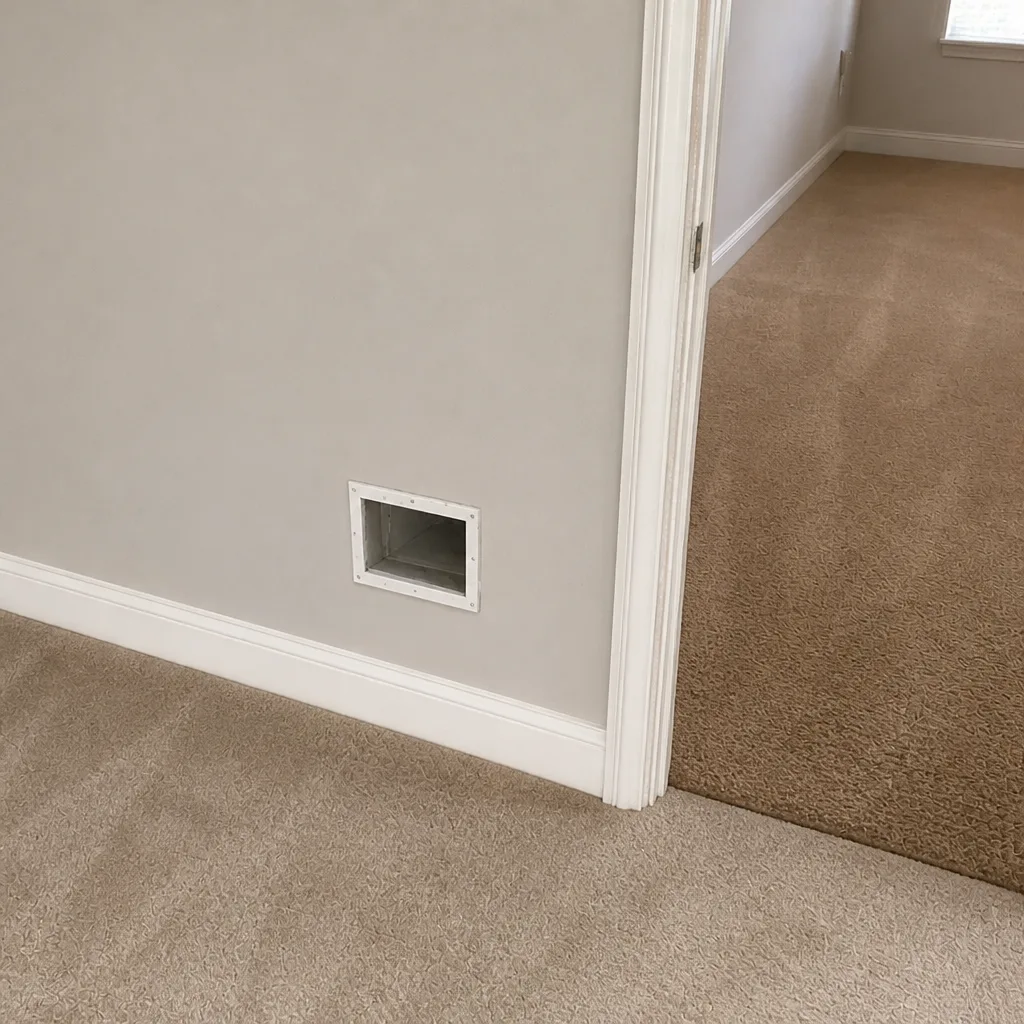
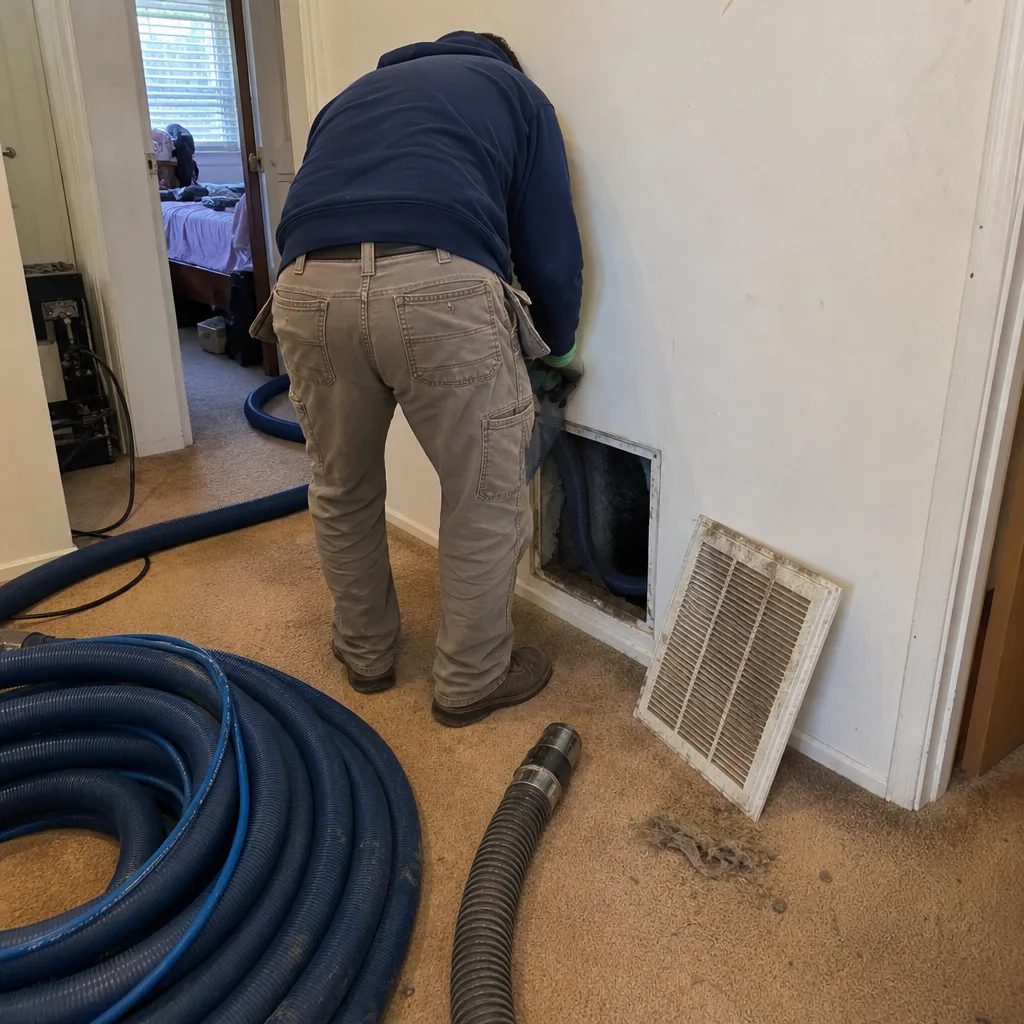
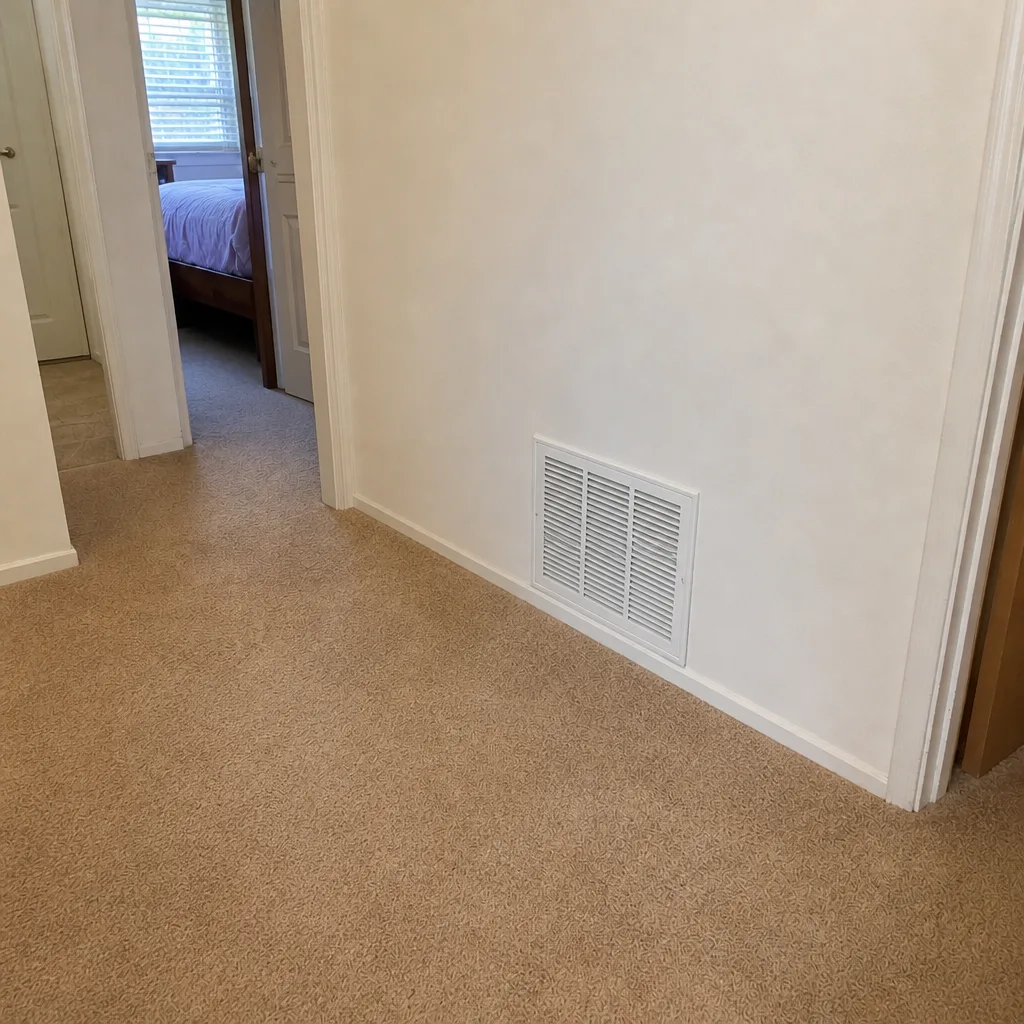
See the difference
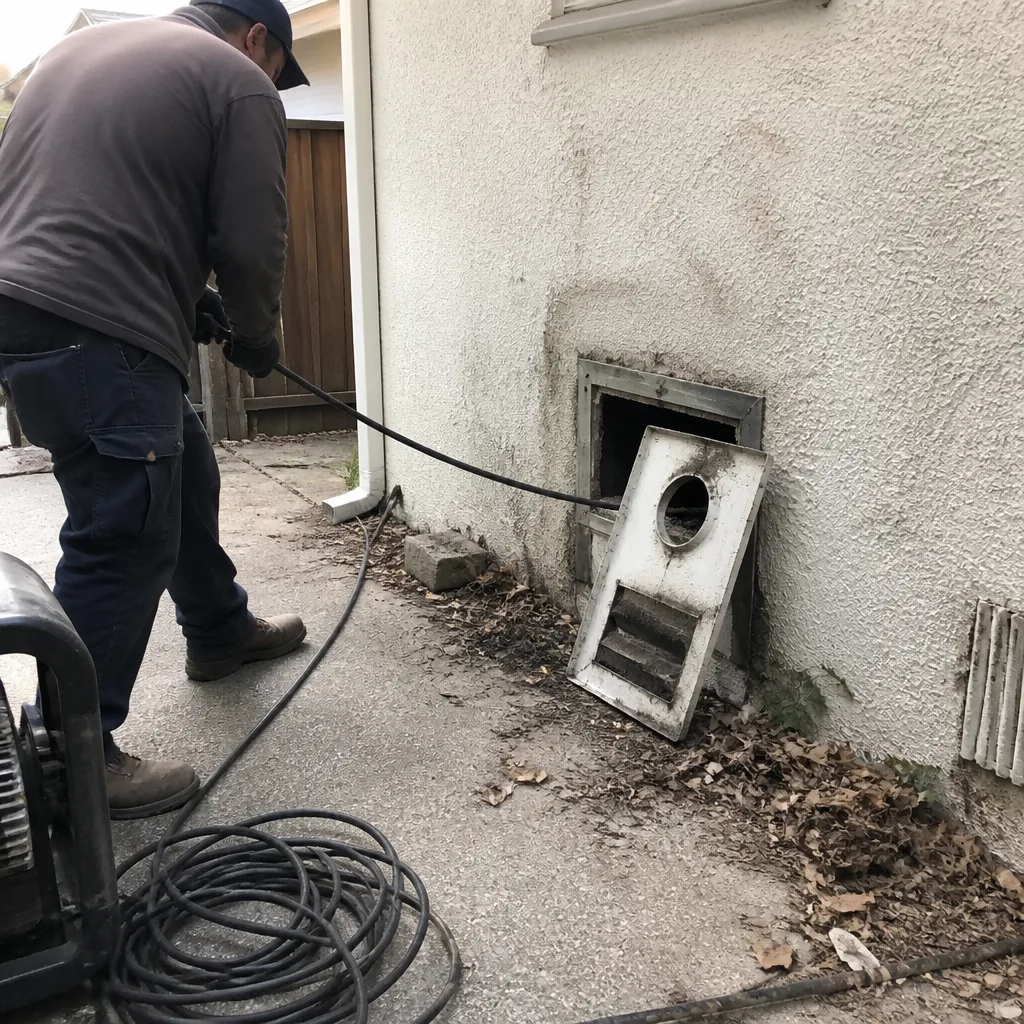 Before
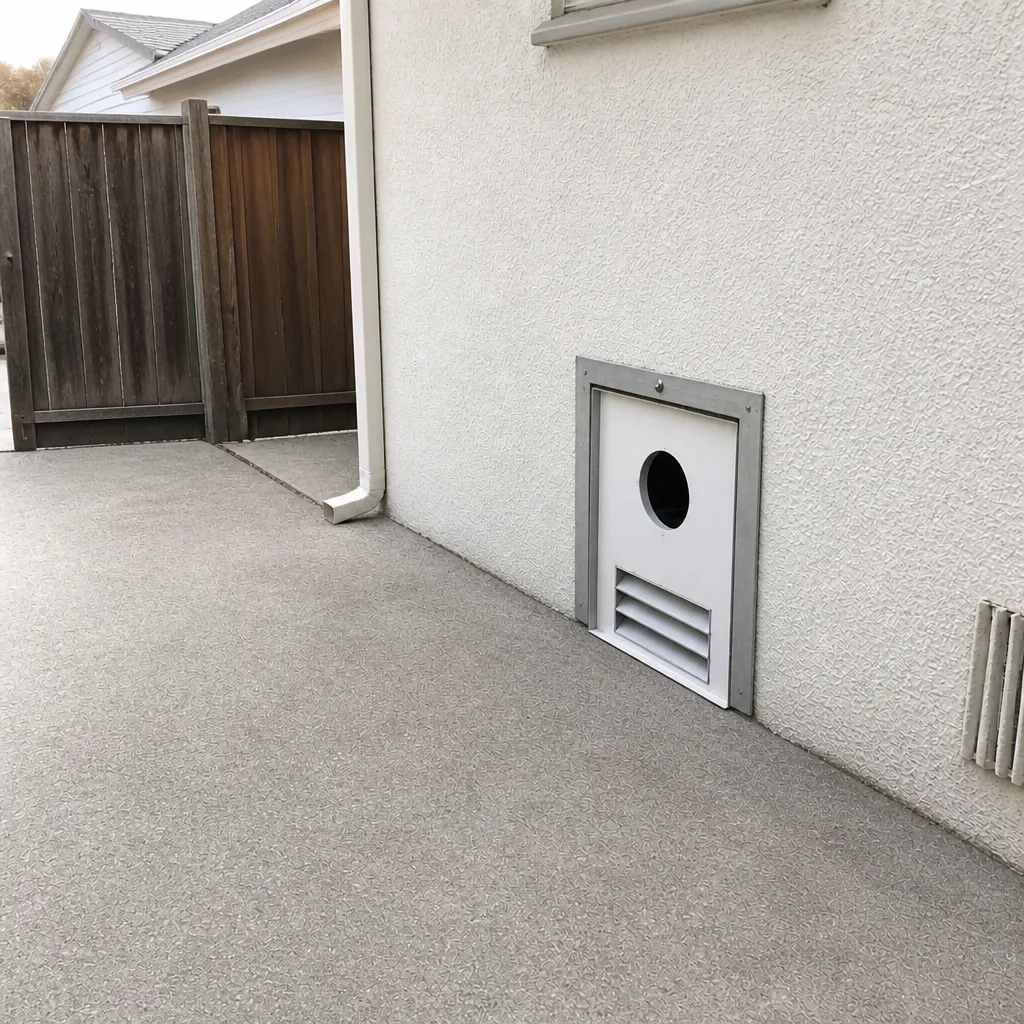 After
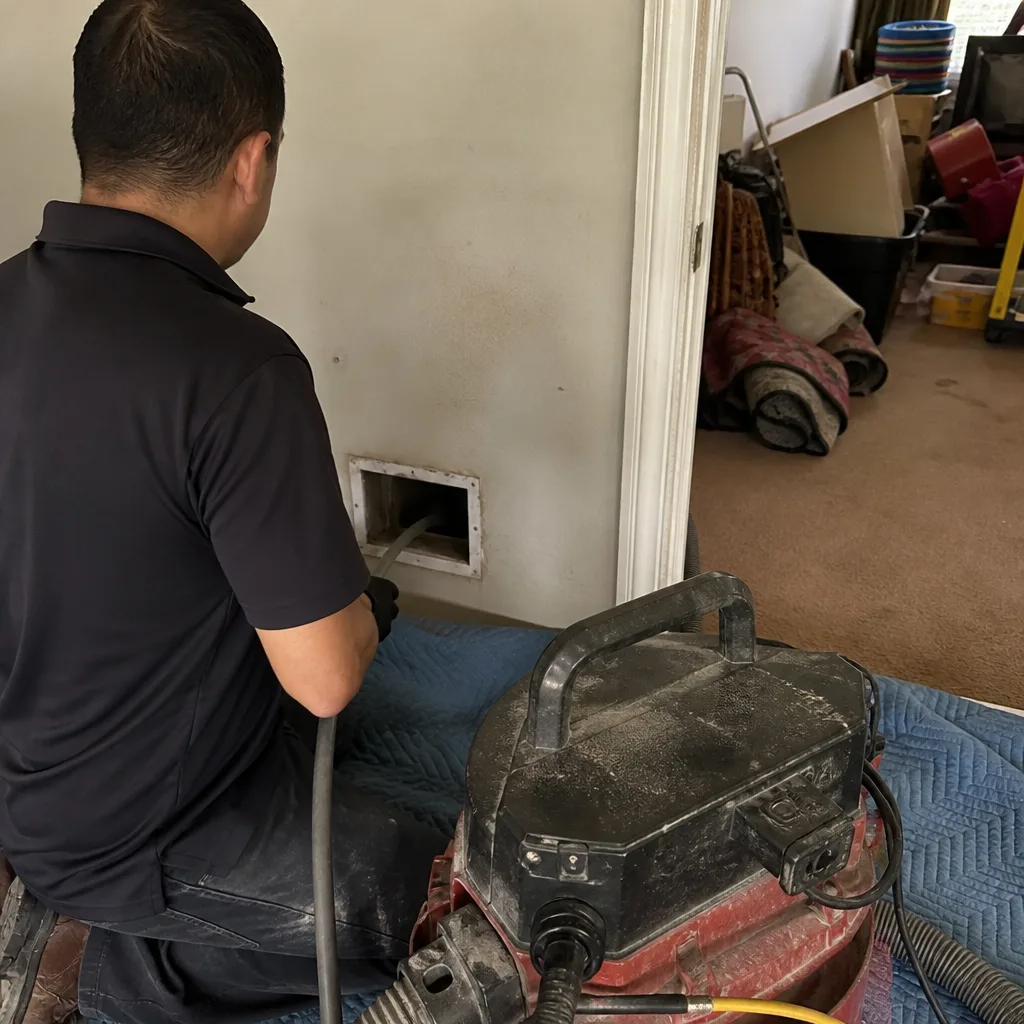 Before
 After
 Before
 After
What a Legitimate Pre-Job Walkthrough Looks Like
The first thing a legitimate contractor does when they arrive is not carry the hose inside. It’s walk the system. A proper pre-job assessment on a typical Arden-Arcade single-story ranch or two-story split-level takes twenty to thirty minutes and follows a consistent pattern.
The technician removes a supply register or two and inspects the duct interior with a light and a mirror or a small camera. They check the return side of the system, which is almost always more heavily loaded than the supply side because returns pull unfiltered air from throughout the living space. They open the filter access at the air handler, look at the blower wheel and the evaporator coil if accessible, and note whether the system has been serviced recently. They also confirm how many vents and returns the home has, so the work scope matches the quote. Only after this assessment do they start laying out equipment and protecting the work area.
A technician who goes straight to work without assessing the system is not saving you time. They are skipping the diagnosis stage, and duct cleaning is a diagnostic trade. You cannot clean what you have not looked at. If someone starts running a vacuum hose within five minutes of arriving, stop them and ask what the scope of the job is. The answer will tell you everything.
We also recommend asking whether the company offers dryer vent cleaning as part of the same visit. Lint accumulation in dryer exhaust runs is a leading cause of residential fires, and the exhaust run is often accessible from the same mechanical areas the duct crew is already working in. A company that treats the dryer exhaust as an afterthought is looking at your home with one eye closed.
The Step-by-Step Hiring Process
Here is the exact sequence we recommend for Arden-Arcade homeowners, from first search to finished job.
- 1
Build a list of three to four companies. Use NADCA’s public directory as the primary source. Supplement with companies that have visible local roots in the Sacramento area and detailed equipment information on their websites. Skip any company that focuses on price in the first headline you see.
- 2
Ask the three equipment questions. Run each candidate through the CFM question, the agitation question, and the containment question. Document the answers. Eliminate anyone who cannot answer confidently.
- 3
Request a written whole-system estimate. Ask specifically for line items covering supplies, returns, main trunk, plenum, blower, and dryer vent. Reject any quote that uses per-vent pricing with exclusions.
- 4
Schedule the walkthrough separately from the cleaning. The assessment should happen before you agree to the job, not as a formality after you have already signed. If the company won’t do a walkthrough first, move to the next candidate.
- 5
Require before-and-after photo documentation. Ask the company whether they shoot each component before cleaning and after. A company that says yes, and delivers it, is showing you the work. A company that demurs is telling you they can’t prove what they did. Insist on this in writing.
- 6
Confirm the final price and scope before work begins. The written estimate sets the price. Any changes during the job should be written, approved by you, and added to the estimate. No verbal change orders.
- 7
Get a post-job report. This includes the photo set, a checklist of what was cleaned, and any notes about the condition of the ductwork. Keep it in your home maintenance files alongside your HVAC service records. If the home is sold later, the documentation adds value.
Common Mistakes to Avoid
- Choosing the lowest bid without reading the exclusions. A $79 advertised special on a 1,800-square-foot Arden-Arcade home is not a full-system cleaning. It is a sales lead generator. The job will not be done at that price, and the conversation will turn to upsells the moment the technician arrives.
- Skipping the equipment conversation. Most people ask about scheduling, availability, and price. Almost no one asks about CFM or brush agitation. The companies that survive on volume count on this. Asking about the method flips the conversation in your favor.
- Accepting per-vent quotes as the final price. Per-vent pricing is structured to expand. Every exclusion is a future line item. Insist on a whole-system figure before you book.
- Treating duct cleaning as a maintenance add-on rather than a system service. Duct cleaning is not like carpet cleaning, where the surface is all that matters. The inside of the duct system affects airflow, static pressure, filter loading, and indoor air quality. Hiring the cheapest available crew for an optional extra is one thing. Hiring them for your family’s air delivery system is another.
- Not asking about post-job verification. If the company cannot show you the before-and-after, you are paying for a claim rather than a result. Photos are the most basic form of proof. If they will not commit to them, you should not commit to the invoice.
- Ignoring the dryer vent during a duct cleaning bid. The duct system and the dryer exhaust both run through the same house envelope. A contractor who quotes one without mentioning the other is not giving you the full picture of your home’s airflow.
When to Call a Professional
Some situations are not worth debating. If you can see dust deposits on the register covers or inside the duct openings, if the home has visible dust sheeting on the walls and ceilings shortly after cleaning, if anyone in the household has persistent allergy or respiratory symptoms while indoors, or if the home has recent construction or renovation dust in the system, the ducts need a professional cleaning. The same goes if you have lived in the home for several years and have never had the system assessed. Duct cleaning is not an emergency service in most cases, but it is also not a cosmetic one. Arden-Arcade homes with older ductwork, especially original sheet metal runs from the mid-century construction boom, accumulate debris that no filter change addresses.
Copper Air Duct Cleaning offers free estimates in Arden-Arcade. Call (833) 734-3714 to schedule an assessment. We answer 24/7. Fast dispatch from 7am to 7pm, Sunday through Friday.
Frequently Asked Questions
A good duct cleaning company in Arden-Arcade uses source-removal equipment with mechanical agitation and negative-pressure containment, holds NADCA membership that verifies in the public directory, provides a whole-system written quote, and documents the work with before-and-after photos. A company that meets all four of those criteria is operating at a professional standard. To get a free estimate from a full-system specialist, call (833) 734-3714.
A professional duct cleaner should use a vacuum with at least 2,000 CFM of airflow at the hose, a rotating brush or agitation system to scrub duct walls, and negative-air containment to capture loosened debris before it enters the living space. Rotobrush source-removal units and Nikro industrial vacuums are two examples of the class of equipment used on legitimate full-system jobs. Abatement Technologies containment machines add another layer of capture. Ask your contractor to name their equipment before you book.
The cheapest Sacramento duct cleaning quotes come from companies using portable equipment with low extraction power and per-vent pricing that excludes the main trunk, blower, and return drops. The low price is a lead generation tool, and the final invoice is built through upsells after the technician arrives. Whole-system pricing from a company using industrial equipment typically costs more up front because it covers the entire system without exclusion games. The cheaper quote is not the better value; it’s frequently a different job altogether.
You know the work was done when the contractor provides before-and-after photographs of the supply registers, return plenum, trunk line, and blower assembly. Ask for this commitment before you book, and hold the technician to it on job day. If a company cannot show you the inside of the ducts after the work, they have not demonstrated the work. Clean ducts are measured, not assumed. Call (833) 734-3714 for a quote that includes photo documentation.
No state license is required specifically for air duct cleaning in California, which means the contractor’s training, equipment, and process are your only quality controls. NADCA membership is the most widely recognized professional credential in the industry and can be verified in thirty seconds through the association’s public directory. Ask for that verification before you ask about pricing.
Yes, in most homes it makes sense to address the dryer exhaust at the same time as the main duct system. Lint buildup in dryer vent runs is a leading cause of residential fires, and the exhaust path is often accessible from the same mechanical areas the duct crew is already working around. Copper Air Duct Cleaning offers dryer vent cleaning as a standalone service or alongside air duct cleaning, so the whole home’s airflow gets addressed in one visit.
The Bottom Line
Hiring a duct cleaning contractor in Arden-Arcade comes down to whether you are hiring for equipment and process, or hiring for price and availability. The no-licensing reality in California means the industry has no floor, so the homeowner’s questions are the only filter that matters. Ask about CFM, agitation, and containment. Verify NADCA membership instead of taking a logo at face value. Require a whole-system flat quote rather than per-vent pricing with exclusions. And insist on photographic proof that the interior of the system was actually cleaned. Do those four things and the worst-case outcome is a fair, documented job. Skip them and you are paying for a story instead of a result.
Written by the team at Copper Air Duct Cleaning, serving Arden-Arcade since 2011.